ServicesWisdom Teeth Removal
Wisdom Teeth Removal in Flower Mound
Sore gums at the back of your mouth, crowding, or a tooth that never fully came in are common reasons to have wisdom teeth out. We plan each removal from clear imaging, take the tooth out gently, and send you home with a recovery plan that makes sense.
When Wisdom Teeth Should Come Out
Wisdom teeth are the third set of molars, and they tend to show up somewhere between the late teens and the twenties. Some grow in straight and never cause a problem. Many run out of room, so they come in tilted, stay hidden under the gum, or push through only part of the way. That partial opening leaves a flap of gum that traps food and bacteria, and it is where most of the pain and swelling begins.
We do not suggest removal simply because a tooth is present. If your wisdom teeth are healthy, easy to clean and not pressing on anything, we will say so and watch them at your regular visits. If they are causing infection, decay on the molar next door or pressure you can feel, taking them out is usually the gentler choice for your mouth in the long run.
What Your Wisdom Tooth Removal Includes
Imaging before anything else
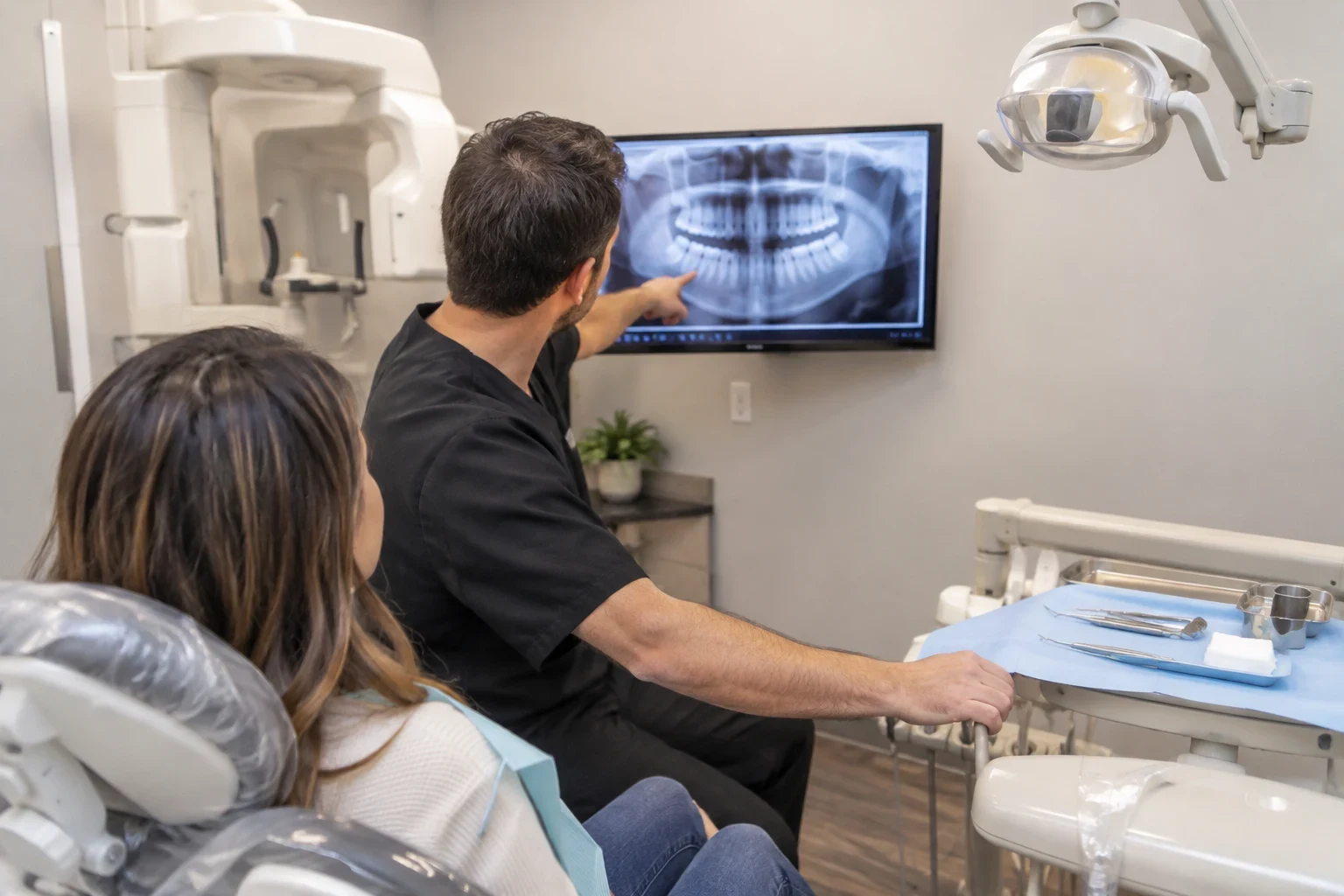
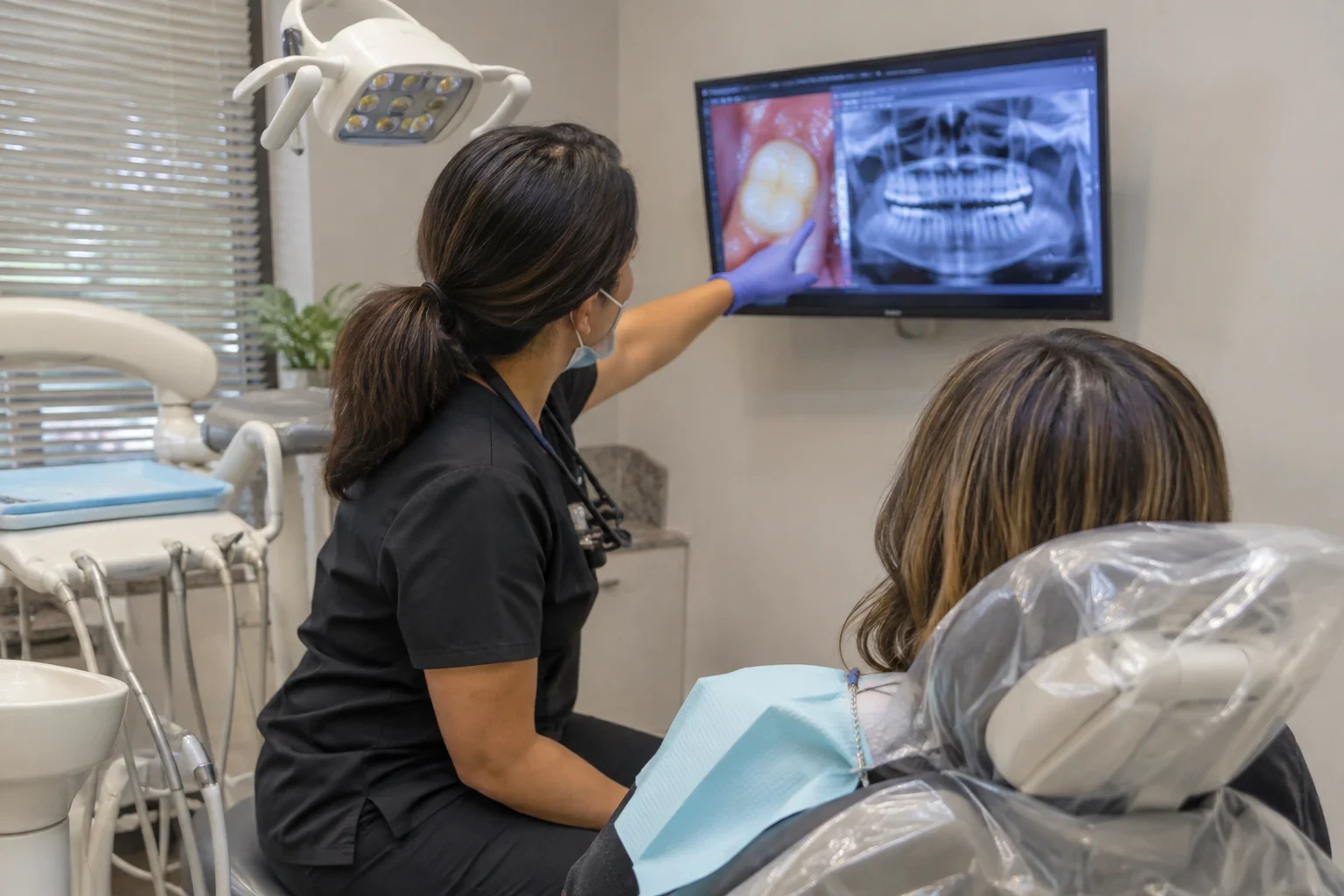
Digital X-rays show the angle and roots of each tooth. When a lower wisdom tooth sits close to the nerve that runs through the jaw, we add a CBCT scan so we can see that relationship in 3D before we begin.
Thorough numbing
We use local anesthetic and give it time to work fully. You should feel pressure during the extraction, not sharp pain, and we check in with you as we go.
Gentle sectioning when needed
A tooth with curved roots or one locked under bone often comes out more easily in sections. Removing it in pieces lets us save more of your jawbone and put less stress on the surrounding tissue.
Careful socket care
Once the tooth is out, we clean the site, smooth any sharp bone edges and place stitches when the gum needs support. These small steps help a healthy blood clot form, which is what protects the socket while it heals.
Clear aftercare guidance
You leave with written instructions for the first few days, including what to eat, how to manage swelling and what to avoid so the clot stays in place.
Signs Your Wisdom Teeth Need Attention
- Swollen, tender gum behind your last molar
- When the gum around a half-emerged wisdom tooth turns puffy and sore, the cause is often an infection known as pericoronitis. It usually keeps returning until the tooth comes out.
- Pain that spreads to your jaw or ear
- An impacted tooth pressing on its neighbors can feel like an earache or a dull ache along the jaw, often worse when you chew.
- A bad taste or smell that keeps coming back
- Food caught beneath a gum flap breaks down there and leaves a lingering taste, even when you brush well.
- Trouble opening your mouth fully
- A stiff jaw near the back teeth can be a sign of inflammation around a wisdom tooth.
- Crowding or damage to the tooth in front
- A wisdom tooth leaning against your second molar can lead to decay or bone loss on a tooth you want to keep for life.
How Your Visit Goes
- 1
Exam and imaging
First we check every tooth and the gum tissue around your back molars, then capture digital X-rays. A CBCT scan is added only when a tooth's position calls for a 3D view. We go over the images with you and point out which teeth should come out and which are fine to keep.
- 2
A clear treatment plan
You receive a written plan covering the steps, the fees and what your insurance is expected to pay. We schedule nothing until every question you have is answered.
- 3
Extraction day
We numb the area completely, take the tooth out as gently as its position allows and tend to the socket before you sit up. Many patients tell us the visit felt calmer than they expected.
- 4
Recovery and follow-up
Swelling is usually at its worst over the first two or three days, then settles. We see you again to check healing and help right away if something feels wrong, such as the throbbing ache that can point to a dry socket.
What Affects the Cost of Wisdom Teeth Removal
No two wisdom teeth sit quite the same way, so your price comes from what the imaging shows us. Before we start, your treatment plan lays out every fee line by line. PPO coverage often helps with this procedure, and 15 or more major PPO dental insurance plans count our office as in-network.
- Where the tooth sits
- A wisdom tooth that has fully broken through the gum comes out more simply. One that is partly or completely held under gum and bone needs more time and more careful work.
- Roots and the nearby nerve
- Hooked roots, or roots resting close to the nerve in the lower jaw, may mean a CBCT scan and removing the tooth in sections. Both change the fee.
- How many teeth come out
- Taking out two or all four at one appointment usually saves you time compared with booking separate visits.
- Coverage and ways to pay
- If you have no insurance, our in-house Membership Plan can bring your costs down. You can also spread payments over up to 24 months with 0% interest financing, and seeing if you are preapproved does not touch your credit score.
Wisdom Teeth Removal Questions
- Do all four wisdom teeth need to come out?
- Not always. Plenty of patients only need one or two taken out because the rest are healthy and easy to keep clean. Your imaging tells us which teeth are causing trouble, and we will walk you through our reasoning for each one.
- Will it hurt?
- We numb the area fully with local anesthetic, so during the extraction you should notice pressure, not pain. For a few days afterward, some soreness and swelling are normal. Most patients do fine with the pain relief we suggest, plenty of rest and cold packs.
- How long is recovery?
- Most people are back to their usual routine within a few days, while the socket keeps filling in underneath for a few weeks. Sticking to soft foods and skipping straws and smoking early on helps protect the clot. Simple upper teeth tend to heal faster than impacted lower ones.
- What is a dry socket, and how do you help prevent it?
- After a tooth comes out, a blood clot fills the opening and shields the bone. If that clot is lost before it should be, the bone is left bare and you feel a deep, throbbing ache, which is what we call a dry socket. We clean the site with care and give you clear steps to keep the clot in place, and if a dry socket does develop, we can treat it promptly to calm the pain.
- Is there a best age to have wisdom teeth removed?
- Younger patients often have an easier time, because the roots are still forming and the jawbone gives a little more. That said, adults well past their twenties can still have wisdom teeth taken out safely. Our advice comes from your X-rays and your overall health rather than the number on your birthday.
Find Out What Your Wisdom Teeth Need
An exam and clear imaging answer most questions in one visit. New patients can start with a full exam and cleaning, and we will let you know if your wisdom teeth should come out.