ServicesEmergency Dentistry
Emergency Dentistry in Flower Mound
A throbbing tooth, a chipped front tooth or a crown that popped off at dinner needs prompt, careful attention. We find what is actually causing the problem, ease the pain and lay out a fix that holds up, with every option explained before we start.
Fast relief, then a repair that lasts
Urgent dental problems rarely wait for a convenient week. Pain that wakes you at night, a tooth that cracked on a popcorn kernel or a swollen gum all tell you something has changed. Our first job is to get you comfortable. Our second is to find the real cause, because a quick patch over an undiagnosed crack or infection tends to fail again.
That is where small details matter. A temporary filling has to seal tightly at the edges so bacteria cannot slip underneath. A recemented crown has to seat fully, with the bite checked so it does not take extra force every time you chew. We take the few extra minutes on those steps so the tooth stays calm until the long-term repair.
Patients come to us from Flower Mound and nearby towns like Highland Village, Lewisville and Argyle. New patients are welcome, and you do not need a referral.
What you get at an urgent visit
- A close look at the problem tooth
- We check the sore area, test how it reacts to cold and gentle tapping, and ask when the pain began and what sets it off. Those details usually narrow the cause quickly.
- Imaging that shows what eyes cannot
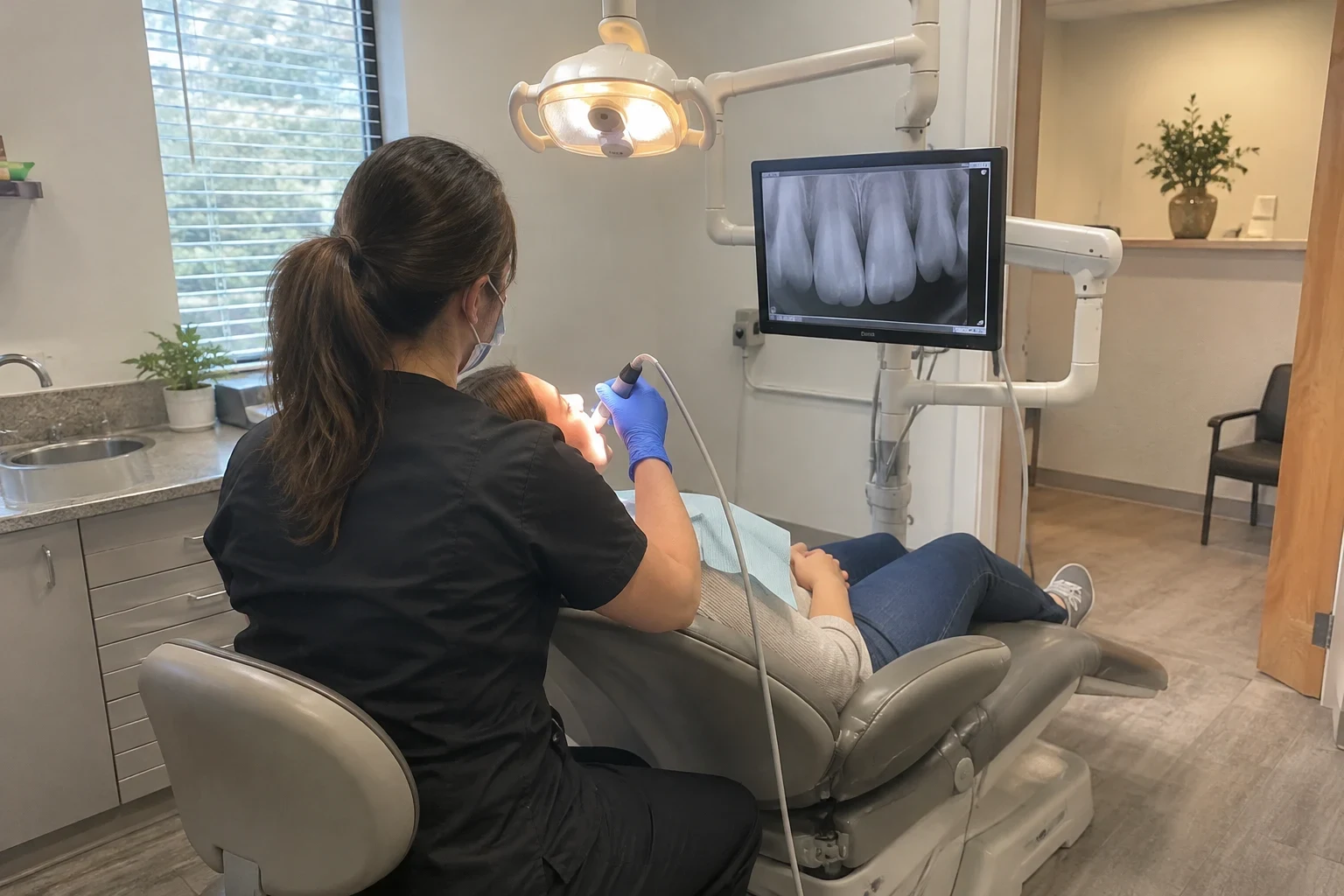
- Digital X-rays reveal decay, infection near the root tip and bone changes. When a crack or root issue hides on a flat image, a 3D CBCT scan gives a much clearer picture.
- Relief before you leave
- Based on the findings, that might mean numbing the tooth and removing decay, sealing it with a temporary filling, rounding off a sharp edge or relieving pressure from an infection.
- Help with loose or lost crowns and fillings
- A crown that is still in one piece, sitting on a healthy tooth, can be cleaned inside and out and cemented back in place. If either is damaged, we cover the tooth with a temporary while a new crown is made.
- A plan in writing
- You go home with a clear record of what we found, what we treated that day and what comes next, such as a root canal, an extraction or a crown. Each option has its cost explained before you schedule anything.
When a tooth problem should not wait
Pain that hangs on or wakes you
A quick twinge that fades is usually minor. Pain that stays after a hot or cold drink, or throbs by itself at night, often points to an inflamed or infected nerve.
A swollen gum or cheek
A pimple-like bump on the gum or puffiness near a tooth is a common sign of infection. If the swelling grows fast, or breathing or swallowing becomes difficult, get to a hospital without delay.
A tooth that chipped or split
Even a small chip can leave softer inner layers exposed, and the damage can spread. A sharp jolt when you bite down and then let go is a telltale sign of a crack.
A lost crown, bridge or filling
The tooth left behind is weaker and more sensitive than it appears. Put the crown in a small bag and bring it along.
A tooth knocked loose or out
Touch only the crown of the tooth, never the root, and keep it wet in milk. The faster it is treated, the better the chance of keeping it.
How your visit goes
- 1
Your phone call
Tell us what happened and where it hurts. We find the soonest appointment we can and let you know what to bring, such as a broken crown or your insurance card.
- 2
Diagnosis first
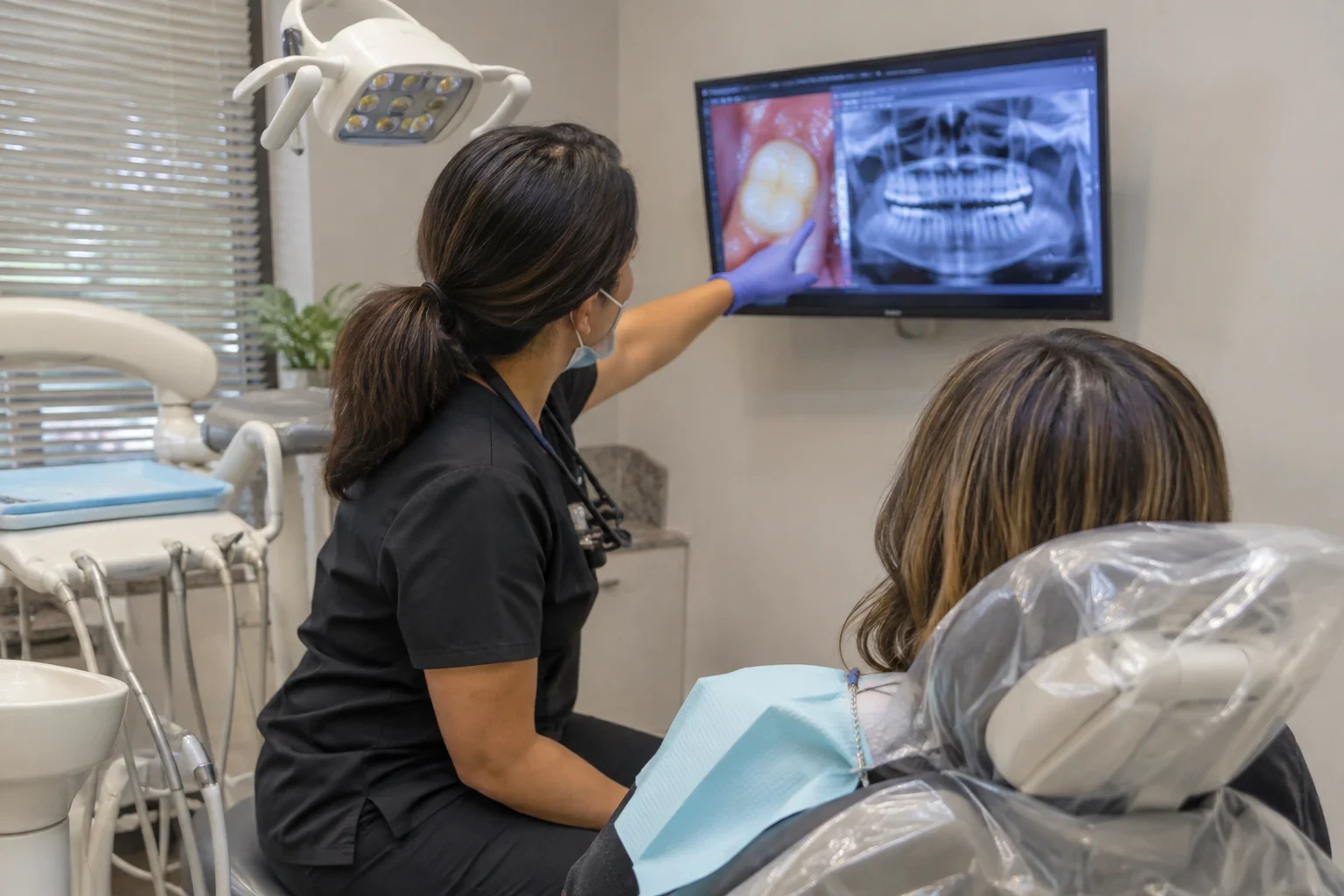
We examine the area, take the images we need and show you what we see on the screen. You hear the cause in plain words before any treatment.
- 3
Getting you comfortable
We numb the area gently and treat the source of the pain. Temporary work is sealed and the bite is checked so it does not fail between visits.
- 4
Planning the lasting fix
If the tooth needs more, such as a root canal, a crown or an extraction followed by dental implants, we walk through each option with its cost and timing so you can choose without pressure.
What shapes the cost of an urgent visit
Everything starts with our focused evaluation, which includes a full exam of the problem tooth, digital X-rays, a 3D CBCT scan when a flat image is not enough, and a treatment plan we go over together. What happens after that depends on what the images show, and you hear the price before any treatment begins. To cover it, many patients draw on PPO benefits, join our membership plan for uninsured patients, or spread the balance over as long as 24 months with financing at 0% interest.
- The source of the pain
- Smoothing a rough chipped edge takes a few minutes. An inflamed or infected nerve that needs a root canal, or a tooth too damaged to keep, is a bigger piece of work.
- How much healthy tooth remains
- When a fracture stays above the gumline, a crown can usually rebuild the tooth. When the split runs down into the root, removal and a plan to replace the tooth are often the honest answer.
- Temporary repair versus final restoration
- Some visits end with a tightly sealed temporary while the permanent crown is made. That final crown is a separate step with its own price.
- How you plan to pay
- We are in-network with 15+ major PPO dental insurance plans. If you have no insurance, the membership plan and financing make costs easier to manage, and seeing whether you are preapproved for financing has no credit score impact.
Questions about urgent dental care
Something not covered here? (972) 573-9487
I have never been to your office. Can I still be seen?
Yes. A lot of the people we see for urgent problems are new to us. Call to set up a focused evaluation and we will find the earliest opening we can.
Are you going to recommend pulling the tooth?
Only when keeping it would not hold up. Plenty of painful teeth recover well after a root canal followed by a crown. When a tooth is beyond saving, we show you the image that tells us so and walk through replacement choices like dental implants or a bridge.
What do I do if a tooth gets knocked out?
Handle it by the chewing end and avoid touching the root. Give it a quick rinse without scrubbing, then either ease it back into the socket or keep it in a cup of milk. Get to us quickly, because the odds of saving it drop with every hour.
When is a hospital the better place to go?
Head to a hospital if swelling is moving toward your eye or down your neck, if a high fever comes with the swelling, or if breathing or swallowing gets hard. Those need medical care first. Once you are stable, we can take care of the tooth.
Is it okay to stick my crown back on at home?
Please skip superglue or any other craft adhesive. It can crack the crown and seal bacteria in against the tooth. Temporary dental cement from a pharmacy can hold it for a day or two, but the crown should be cleaned and properly recemented here.
Get out of pain and get a real answer
Tell us what happened and we will find you a time to come in. You will leave knowing the cause, the options and the cost of each.