ServicesExtractions
Tooth Extractions in Flower Mound
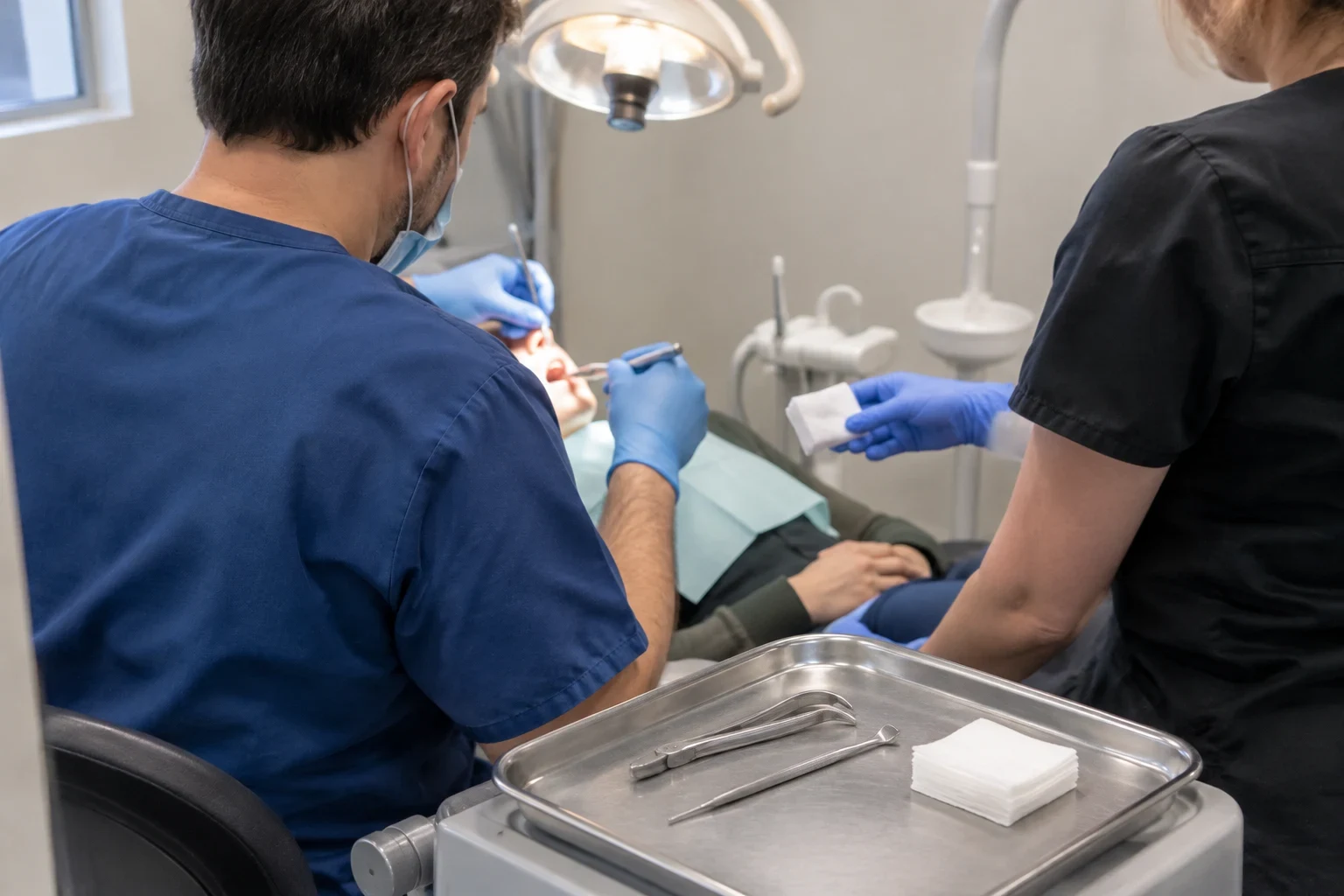
When a tooth can't be saved, how it comes out matters. We remove teeth gently and slowly, protecting the bone and gum around them so you heal well and keep good options for a dental implant, bridge or denture later.
When Removing a Tooth Makes Sense
Our first question is always whether a tooth can be kept. Plenty of painful teeth can be saved with a root canal followed by a crown. Others are beyond that point: split below the gumline, loosened by advanced gum disease, or so decayed that nothing sturdy remains to rebuild on. For those teeth, a clean extraction is the healthier path.
Taking the tooth out is usually the short part. The care goes into what surrounds it. The bone wall around a root is thin and can break under too much force, and once it is gone it will not come back by itself. We loosen each tooth slowly to keep that bone whole, since it supports whatever replacement you pick later.
What Comes With Your Extraction
- 01
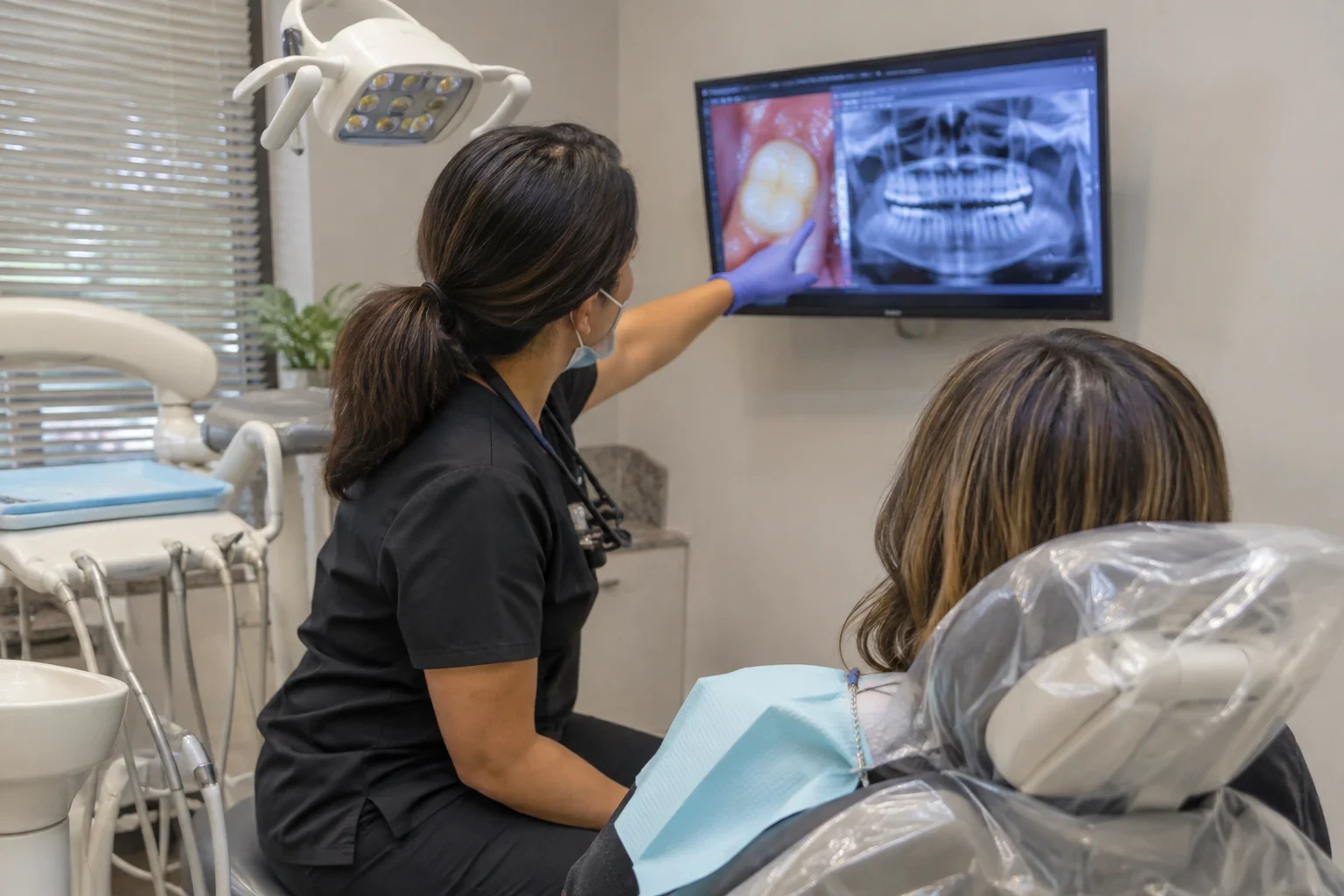
Imaging before we begin
Digital X-rays, plus a CBCT scan when the roots or nearby nerves need a closer view. We map the shape of each root before any work on the tooth starts.
- 02
Numbing we confirm first
We place local anesthetic and check the area carefully before going any further. What you should notice is pressure rather than sharp pain. Raise a hand whenever you need a break and we will stop.
- 03
Dividing the tooth when it helps
Teeth with curved or several roots are often split into smaller pieces and lifted out one by one. It takes us longer, but it is much gentler on the surrounding bone than forcing the whole tooth out in one go.
- 04
Cleaning and closing the socket
We clear the socket, round off any sharp bone edges and add stitches when they help the gum heal together evenly.
- 05
Aftercare in writing and a check-in
You go home with plain instructions for the first several days, and we follow up to confirm you are healing as expected.
Questions about Extractions?
Call(972) 573-9487When a Tooth May Be Past Saving
A split that reaches the root
Fractures that travel down into the root generally can't be sealed. You may feel a quick, sharp pain on that tooth when you bite.
Looseness you can feel
A tooth that shifts usually means gum disease has worn away the bone holding it. Beyond a certain stage, keeping it causes more trouble than it solves.
Too little tooth left
When decay leaves almost no healthy structure above the gum, a filling or crown has nothing to hold onto.
Infection that keeps returning
Repeated swelling, a small bump on the gum or a bad taste that comes back may point to an infection a root canal can't completely clear.
Making room for braces
In some cases one tooth is taken out so the rest of your smile has space to straighten.
How Extraction Day Goes
- 1
Review and questions
We go over your imaging and treatment plan, confirm your health history and answer anything on your mind. Nothing starts until you are ready.
- 2
Numbing and checking
We place local anesthetic, give it time to work and check the area before beginning.
- 3
Gentle removal
We loosen the tooth gradually with small, controlled movements, sectioning it if the roots call for it. Most simple extractions take only a few minutes.
- 4
Closing and aftercare
We clean the socket, place gauze and stitches if needed, and walk you through eating, rinsing and pain relief for the next several days. Most patients drive themselves home.
What Shapes the Price of Removing a Tooth
We price an extraction only after we have studied the tooth and its roots, so the figure matches what your mouth actually needs. Each item on your treatment plan is explained before we begin. We will also go through your insurance benefits with you so you know what they cover.
- Straightforward or surgical
- A tooth that sits fully above the gum with straight roots comes out more simply. One that has broken off at the gumline may need a small incision or to be removed in sections.
- How the roots are built
- Long, curved or fused roots take extra time. So do back molars that sit close to the sinus or a nerve.
- The imaging your tooth calls for
- Standard X-rays show enough for many teeth. Others need a CBCT scan so we can plan around nearby structures safely.
- Preparing for a future implant
- When a dental implant is the plan for that spot, your treatment may include added steps that help the bone hold its shape while it heals.
- Ways to pay
- We are in-network with 15+ major PPO dental insurance plans, and patients without coverage can join our In-house Membership Plan. If you would rather pay over time, our financing carries 0% interest and can stretch as long as 24 months. Finding out if you qualify leaves your credit score untouched.
Common Questions About Extractions
Is having a tooth pulled painful?
Once the area is numb, the removal itself should not hurt. Expect firm pressure and a pushing sensation. Most patients are sore for a few days afterward, and over-the-counter pain relief usually keeps that in check. We will tell you what to take and when.
How long until I am healed?
Gum tissue typically closes over the site within one to two weeks. The bone beneath keeps filling in over the next few months. Most people are back to their usual day by the next morning and stick with softer foods for a few days.
What should I do to keep the socket from drying out?
After a tooth comes out, a blood clot forms in the socket and protects the bone while it heals. If that clot comes loose too soon, the area gets painful, which is called a dry socket. Skip straws and smoking, and rinse gently for the first few days. If soreness is getting worse rather than easing by day two or three, call us and we will check it.
Does the missing tooth need to be replaced?
Not every gap has to be filled. Over time, though, neighboring teeth tend to drift into an open space, and the bone where the root used to sit slowly thins. Before or after your extraction, we can compare a dental implant, a bridge and a denture side by side, and the choice stays yours.
Can I have the tooth removed now and get an implant later?
Yes. A careful extraction sets up a strong foundation for a future implant. If an implant is in your plan, we remove the tooth with that next step in mind.
Talk to Us About That Tooth
If a tooth is cracked, loose or keeps flaring up, a short visit will tell you whether it can be saved or should come out. Patients from Flower Mound, Highland Village, Lewisville and nearby towns can get started with our new patient special.